
Every creator has a version of this week. Monday, you post a Short because you remembered. Tuesday, nothing. Wednesday, two in a row because you had an idea and then a second idea. Thursday, none. Friday, one, badly cut. Then a week of silence, and the familiar thought that the platform has stopped showing your work to anyone.
The problem is usually not the ideas. It is that posting has no shape. There is no plan on the wall saying which days, how many, what time, with which titles. When there is no shape, every other job wins the argument.
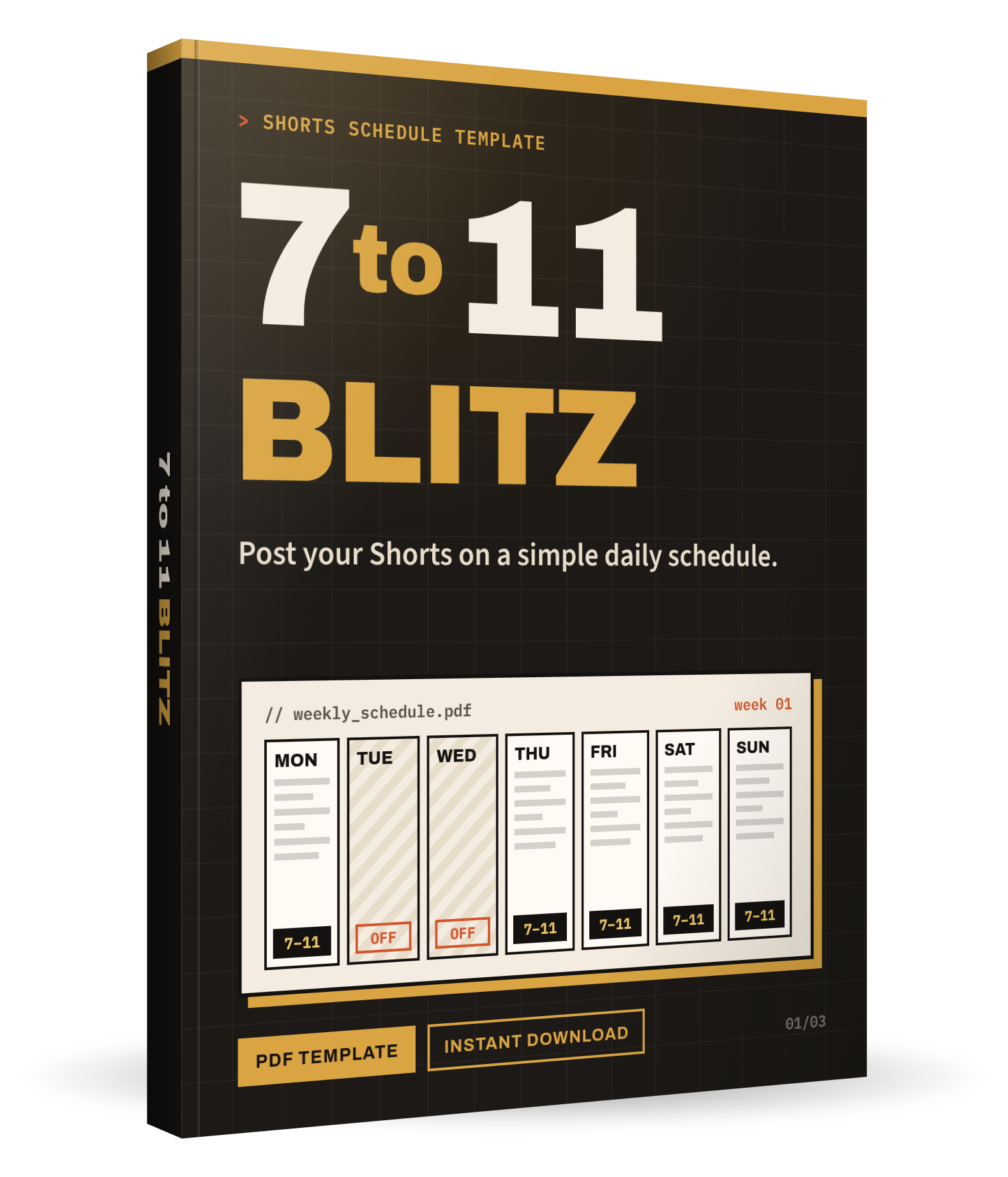
7 to 11 Blitz is a PDF that puts the shape on the wall. It is a weekly YouTube Shorts posting schedule: 7 to 11 Shorts a day, five to seven days a week if you want the full volume, three or four if you do not, a midnight Central upload window you can convert to your own time zone, a grid for the titles you plan to cut, and a posting-day checklist. It is $17, one time.
Get 7 to 11 Blitz for $17 + My Bonuses
What is 7 to 11 Blitz?
7 to 11 Blitz is a $17 PDF workbook from Chris Ramirez that lays out a weekly YouTube Shorts posting schedule. It sets a daily target of 7 to 11 Shorts, a midnight Central upload window with space to convert it to your own time zone, a grid for planned titles and a posting-day checklist. It is a planning template, not a service that posts for you, and it does not promise views.
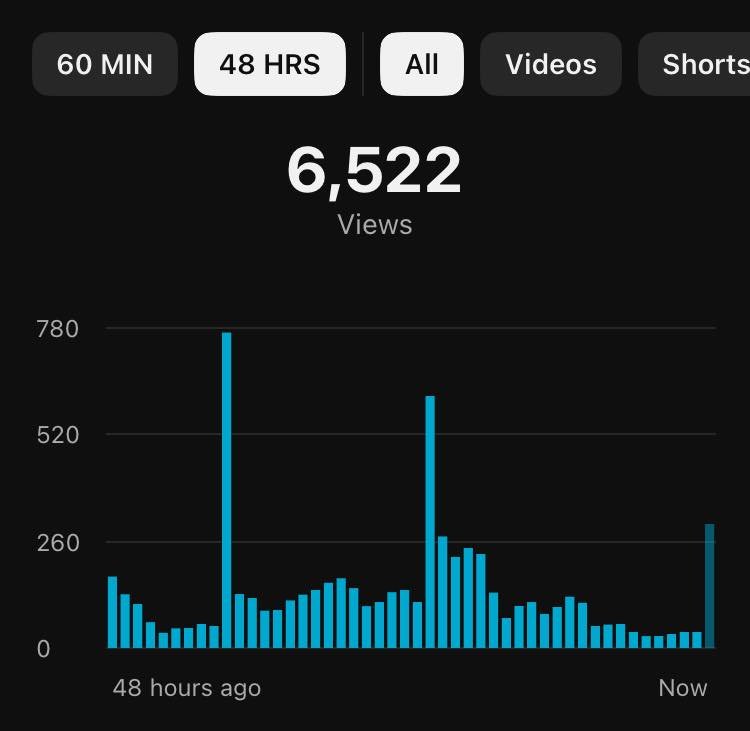
That last point is handled more honestly than usual. The sales page opens with a scan of Chris's brother Tim's channel, a retro gaming sketch comedy account: just over 3,400 Shorts, about 1.6 million views, a median Short around 280 views. Those are not flattering numbers, and they are printed deliberately, because the page is selling a schedule rather than a view count.
The argument that follows is narrow: posting when you remember produces a feed with gaps, and gaps are expensive in a format that rewards frequency. If the bottleneck is deciding what to post and when, a written week removes the decision. Chris uses the schedule on Tim's channel and on his own make-money-online channel, and the book carries both as case studies rather than one.
What do you get inside the 7 to 11 Blitz PDF?
The Blitz is small and specific. It is not a course, there is no video library inside the front end, and it does not walk you through a full YouTube strategy. What it does is put the posting week on paper, then give you the tools to fill it.
- The posting week, laid out. A daily target of 7 to 11 Shorts, with 5, 4 or 3 days a week as a stated alternative rather than a failure mode.
- The midnight Central upload window. A reminder block for when to post, with space to write the conversion for your own time zone so you never guess it mid-edit.
- A weekly grid for planned titles. One row per day, one cell per Short, so the week is decided before you film rather than after.
- The posting-day checklist. The steps that have to happen between picking the long video and the last upload, in order.
- The two-pass clip method. The page describes recording the source video with a cloner tool and then running two passes in Opus.pro: clips under 30 seconds, then clips from 30 to 59 seconds. Two lengths, one source session.
- The recording approach. Film in one take, talk to the tools in plain English, and keep the takes that land, instead of scripting every Short and abandoning the schedule by Wednesday.
The weekly grid is the part that changes behaviour. Deciding seven titles is easy. Deciding seventy-odd titles is not. When the grid is empty on Sunday night and the week has already started, the schedule stops being a schedule and becomes a diary of how far behind you are. Filling the grid is the first day's work.
How does the 7 to 11 posting method work?
The method has three parts: record one long source take, cut it into Shorts of two lengths, and post them on a fixed schedule. The PDF supplies the schedule and the checklist; you supply the footage and the judgement about what keeps.
The recording step is deliberately low-friction. Write bullets, read them a few times, then talk through them in one unbroken take, doing a few takes of each bullet while the camera keeps rolling. The point is to compress filming time into one session so the edit has something to work with, rather than filming fifty separate clips across a week.
The edit step hands the raw take to an AI editing tool: the page names Grok Bot or a similar tool. You ask it in plain English to cut the dead air, make the jumps seamless and land the point. The two-pass approach produces clips under 30 seconds and clips from 30 to 59 seconds from the same footage, which is what fills a 7-to-11 slot without a second filming day.
The posting step is where the workbook earns its price: the grid says what goes up Monday through Sunday, the time zone conversion is written next to the upload window, and the checklist stops a Short going out with a missing caption or a mistake in the title.
Is the 7 to 11 workload realistic?
Seven to eleven Shorts a day is a lot. The page never pretends otherwise, and it explicitly offers 5, 4 or 3 days a week as an alternative. That honesty is worth a lot in a niche where most schedules quietly assume you have nothing else to do.
Realistically, the workload is two jobs: one long recording session, then a batch of edits. If you can do one filming session and one editing session a day, the grid is fillable. If you cannot, drop to four days and keep the grid honest. A four-day schedule you actually follow beats a seven-day schedule you abandon by Thursday.
The method also works better for some creators than others. The page says so: if you already do sketch comedy, improv or gaming, the daily volume gives those skills somewhere to go. Chris runs it on his brother's retro gaming channel and on his own make-money-online channel, which is a useful demonstration that the schedule is niche-agnostic even if the content is not.
What bonuses do you get with 7 to 11 Blitz?
Order through this review and my Shorts Scheduling Kit comes with the workbook, delivered by email once your receipt clears.
- The 30-Title Bank. Thirty Short titles sorted by hook type, so the weekly grid never opens empty and the "what do I post" question is answered before you film.
- The One-Take Script Sheet. A bullets-to-voice layout with a timing column, built for the record-in-one-pass method so the AI edit has clean material to cut.
- The Time Zone Conversion Card. The midnight Central window written against the major time zones, so the upload slot is decided once rather than guessed every night.
- The Weekly Review Sheet. Five questions to ask at the end of each week, with a column for which Shorts you would make again, so the schedule improves instead of repeating.
Email support@testedapps.com with the subject "7 to 11 bonuses" and your receipt, and the kit comes back to you.
Grab 7 to 11 Blitz for $17 + My Bonus Kit
What should you know before you buy?
- This is a plan, not a posting service. You still make the Shorts. For $17 you get a clear week on paper, the filming and editing approach, and a checklist; the camera work is yours.
- No view count is promised, and the case-study numbers are not a forecast. The channel figures on the sales page belong to those channels. Chris says plainly that he cannot copy them onto yours, which is the right way round.
- The refund window is a full year. The page states a 365-day guarantee, so the decision is low-risk; if the schedule does not suit you, ask for a refund through the checkout.
How much does 7 to 11 Blitz cost?
The front end is $17, one time. That buys the Blitz PDF: the weekly schedule, the 7-to-11 daily target with lower/day options, the upload window, the title grid, the posting-day checklist and the filming and editing approach.
The price is scheduled to double to $27 after the launch week, and the page shows a countdown to that change. The 365-day guarantee sits on the $17 purchase.
Optional upgrades are shown at checkout, each on its own page with a way to decline. None is needed to use the Blitz schedule for a full year.
Who is 7 to 11 for?
It is for creators who already have long-form footage or can record it, and whose problem is that Shorts do not go out consistently. A podcaster cutting clips from a weekly recording, a gamer with a stream archive, a coach with a library of talks: all three have the raw material and no shape for the week.
It is also for people whose creative strength is comedy, improv or gaming, because the daily volume feeds those skills rather than draining them. The page uses Chris's brother's retro gaming sketch channel as the example for exactly this reason.
It is not for someone who wants a tool to post automatically. That person will be disappointed by a PDF, and the page says so before you buy, which saves everybody time.
Final verdict
At $17, 7 to 11 Blitz is a cheap fix for a real and common problem: no plan. The workbook is small, the case studies are unusually honest about what a median Short actually gets, and the four-day option makes the workload adjustable instead of aspirational. The one-take and two-pass method fits the schedule it is selling, which is more than most planning templates manage.
Four out of five. The missing point is that the workbook is only a schedule: if your bottleneck is ideas or editing rather than consistency, the grid will not fix it on its own.
Start with 7 to 11 Blitz for $17 + My Bonuses
If you ran this schedule, would you commit to all seven days or start at four? Tell me in the comments.
Some links in this article are affiliate links; I may earn a commission at no extra cost to you.